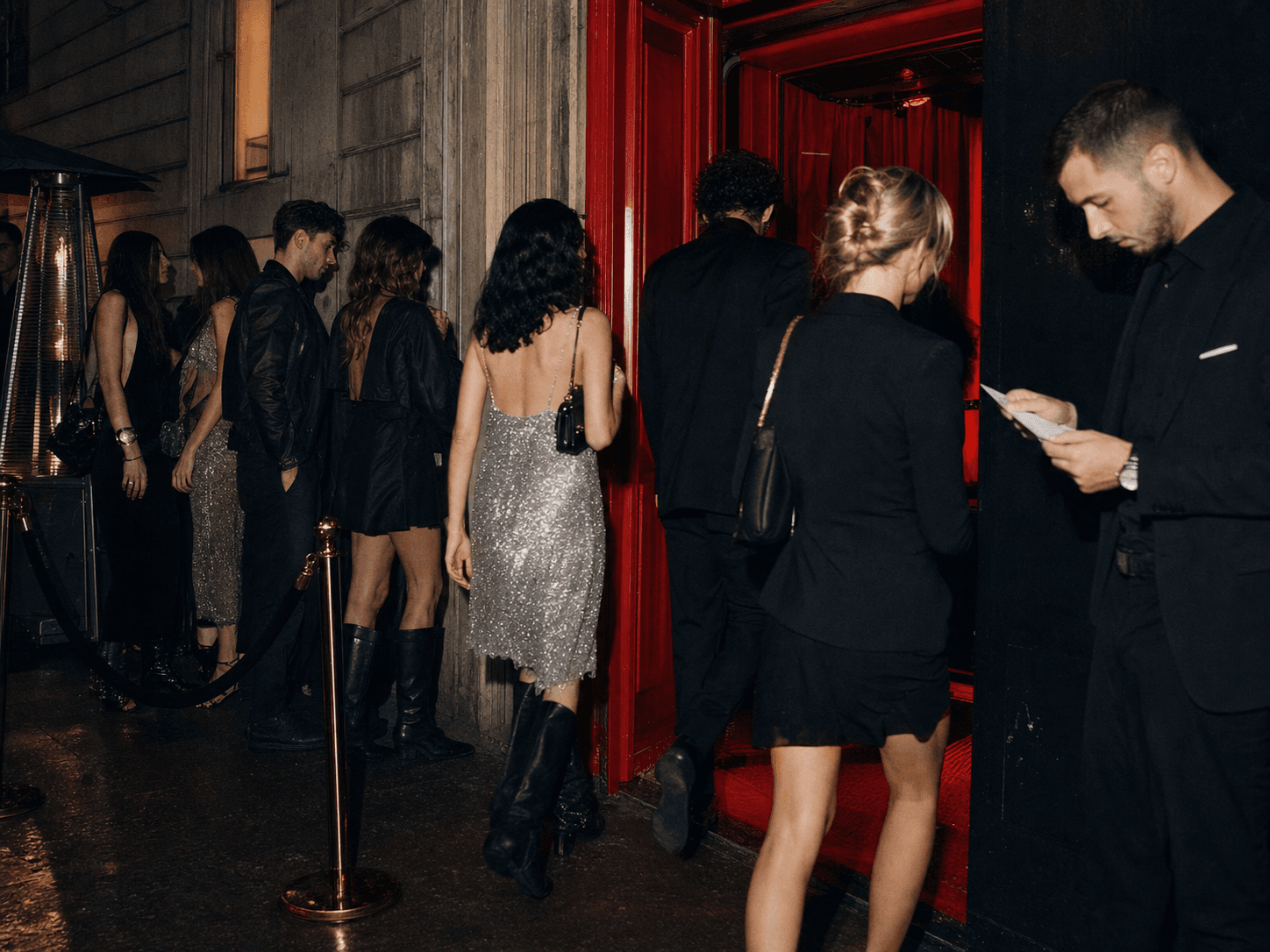
At 10:26 p.m., six people stand beneath a red awning studying a locked door. There is no restaurant name, only a brass number and a small light glowing above an intercom. One person checks the confirmation message for the fourth time. Another insists they are not late because the table was booked for 10:30 and the dining room is visible through a narrow curtain. Inside, someone lifts a glass toward the window. The door remains closed until exactly half past.
The impossible dinner reservation has replaced the nightclub guest list as the city’s preferred social test. A decade ago, the story began at midnight behind a velvet rope. Now it begins weeks earlier with a calendar alert, three devices, and a booking page that appears to contain no tables at any hour. Getting in requires timing, relationships, luck, or a willingness to dine when most people are considering breakfast. The reward is not simply dinner. It is possession of the night’s opening scene.
The table before the party
Restaurants have always been places to see and be seen, but the newest rooms are designed to function as entire social ecosystems. They are small enough that every arrival changes the atmosphere. The bar is close to the tables. The host knows which parties might overlap. Music rises after the last main course, and nobody produces a check until someone asks twice. The dining room does not lead to nightlife. It slowly becomes nightlife while everyone is still seated.
This shift suits a generation that wants glamour without the administrative burden of moving fifteen people between locations. Dinner provides a time, a chair, and a reason to speak to the person next to you before the music becomes too loud. It also provides plausible innocence. Nobody went out on a Tuesday. They merely had a late reservation. The dancing that happened near the coat check was an unforeseen development.
The most desirable table is no longer the one everyone can see. It is the one everyone has heard about.
Scarcity is part of the appeal, though not always in the way diners assume. The best small restaurants are not hiding hundreds of tables from the public. They have twenty-eight seats and a long list of regulars who book the next meal before finishing the current one. Cancellations move through text threads faster than reservation platforms. A table becomes social currency because it cannot be manufactured at the last minute. Inviting someone says not only that you want their company, but that you planned for it.
The choreography of a room
Inside the red-awning restaurant, the six-person table is positioned between the bar and the open kitchen. There is no best seat; everyone faces something worth watching. A designer at the next table recognizes one guest from a summer wedding. The host introduces a musician waiting for a barstool. By the time the first plates arrive, the room has the density of a private party without any single person carrying the responsibility of hosting it.
Operators carefully manage that density. Reservations are staggered to avoid an empty first hour and a chaotic second one. Regulars may be placed where they naturally greet arrivals. Large tables are rare because they become islands. The room needs groups small enough to leak into one another. A successful night feels accidental even when every seat, light level, and musical transition has been arranged with nearly theatrical precision.
The food cannot be incidental, but it need not demand reverence. Menus favor things that can be shared without a speech: cold seafood, crisp potatoes, a whole fish, a dessert placed in the middle with too many spoons. Dishes arrive at a pace that protects conversation. The most photographed plate may be the least important. What diners remember is the moment the candles were replaced, the bar sent over a drink, or the chef appeared with something not listed on the menu.
When exclusivity curdles
There is a tedious version of this culture. Reservation scarcity can turn hospitality into status theater, encouraging diners to treat staff like gatekeepers and dinner like proof of influence. Some rooms cultivate opacity until basic planning feels humiliating. A restaurant may be difficult to book because it is loved; it may also be difficult because frustration is part of its marketing. The difference becomes clear once the door opens. Real hospitality makes the effort disappear. Manufactured exclusivity keeps reminding you that entry was granted.
The smartest restaurants understand that a hard reservation creates an obligation to be generous. Hosts remember names without performing memory. Water appears quickly. Nobody is punished for not knowing the hidden rules. The room may be selective about capacity, but it is not selective about warmth. This is why regulars return and why a first-time guest begins thinking, halfway through dinner, about whom to bring next.
At 12:40, the tables near the bar are cleared but not reset. The music changes. Two guests who claimed they had early meetings order another bottle. The locked front door is now propped open to the night air, and friends of the kitchen drift in without asking for seats. The reservation has completed its transformation. Nobody has gone to a party. The party has arrived around the table, one late plate and familiar face at a time.
The group finally leaves at 2:05, but the table continues to shape the night. Two people share a car uptown. Three follow the musician to a listening bar. One stays behind to help finish a plate at the counter. By morning, everyone will describe the evening differently, yet all versions begin with the same improbable reservation. That is the table’s real value: it gives a scattered city a precise place to start.
Weeks later, the food may blur, but the entrance remains vivid: the red awning, the locked door, the minute hand reaching half past. Anticipation gave the meal its first flavor. The impossible table worked because, once everyone sat down, difficulty gave way to ease.