At 7:18 on a Thursday evening, the lobby of the Beaumont is busier than its dining room. A woman in a black column skirt is pretending to read a newspaper beneath a chandelier. Two friends in narrow sunglasses have ordered sparkling water they are barely touching. Near the revolving door, a man in a velvet jacket checks his reflection in the brass directory. Nobody appears to be staying at the hotel. That is not the point. They have dressed for the lobby, and for the particular kind of possibility a lobby provides.
The hotel-lobby outfit is the newest answer to a familiar fashion problem: where do you wear clothes that are too deliberate for errands and too interesting to save for a formal invitation? You wear them somewhere with flattering lamps, deep chairs, and a bar close enough to supply an alibi. The outfit is not exactly eveningwear. It has more narrative than that. It suggests a meeting before dinner, a drink after a train, or a conversation that began because every other table was occupied.
A room designed for entrances
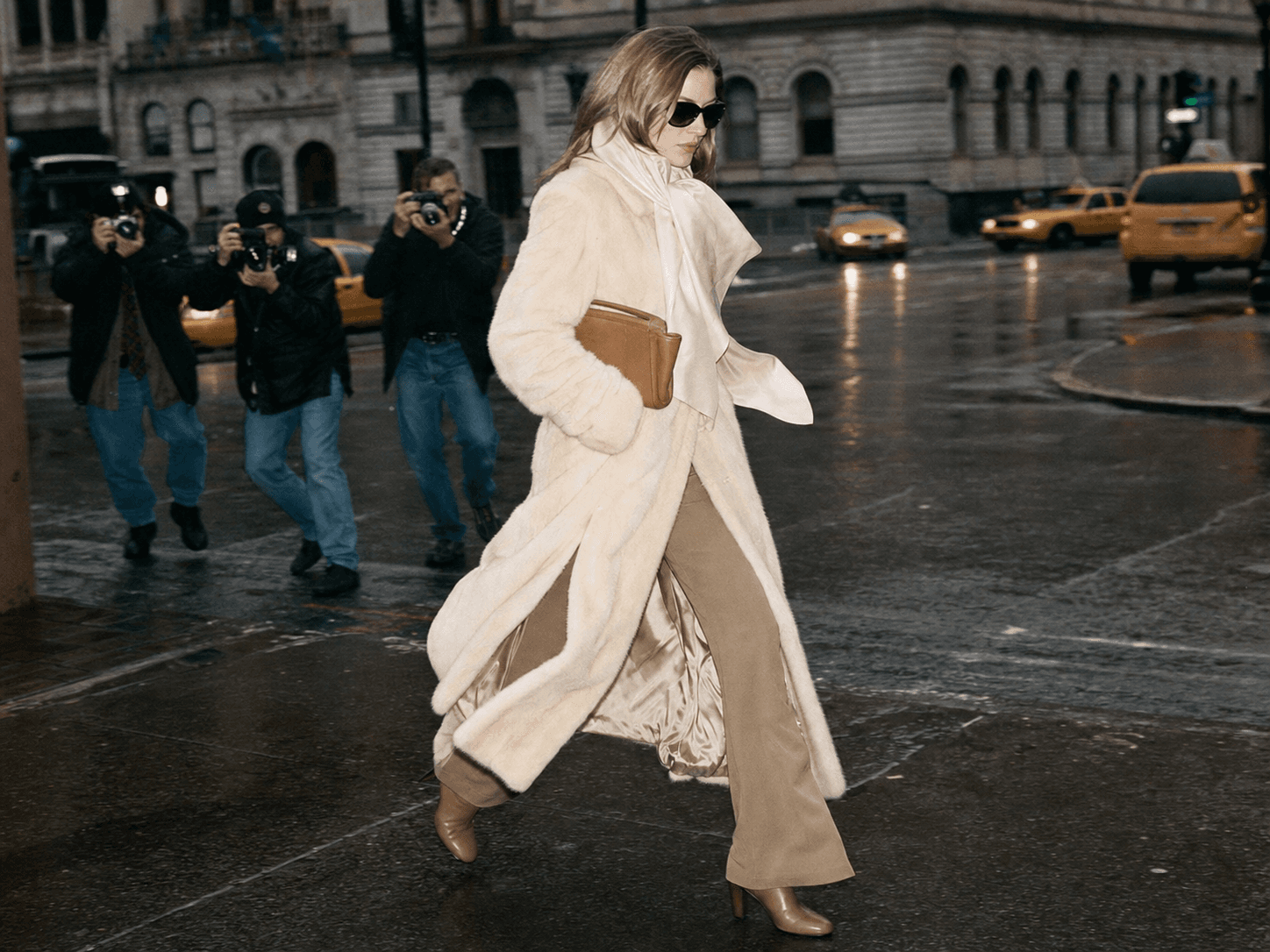
Hotel lobbies have always rewarded a good entrance. Their doors revolve slowly. Their floors make heels sound important. Even the lighting understands that people should be seen first from a distance. But the current fascination is not simple nostalgia for grand hotels. It is a reaction to years of dressing for images cropped tightly enough to erase the room. The lobby look needs context. A silk scarf wants a draft from the door. A long coat needs marble to move across. Gloves make more sense when a brass handle is involved.
The essential pieces are familiar but newly theatrical: a coat with enough volume to remain on indoors, trousers that nearly touch the floor, a small evening shoe, and a bag that looks as though it contains a room key even when it does not. Color is controlled—black, cream, tobacco, an occasional medicinal red—but texture does the talking. Satin beside wool. Patent leather against old stone. A flash of jewelry where the cuff opens when someone reaches for a glass.
The lobby look does not ask where you are going. It asks who might see you on the way.
There is a social logic to the trend, too. Restaurants require a reservation and bars increasingly require advance planning disguised as spontaneity. A lobby asks almost nothing. You can arrive early, stay late, and change the shape of the evening without announcing it to an app. The clothes follow that looseness. They are polished enough to become a plan and relaxed enough to survive when the plan changes. The woman with the newspaper eventually joins a table of four. Nobody asks whether she was expected.
The outfit must survive sitting down
This is where the lobby look separates itself from ordinary occasion dressing. It must work while waiting. The coat cannot depend on being carried over one shoulder. The skirt cannot require constant adjustment. The shoe must tolerate the walk from the curb and the possibility of a second location. The effect is glamorous, but the construction is practical. A lobby is a room in transit, and clothes worn there need to look complete even when the person wearing them has temporarily nowhere else to be.
Designers have noticed. Recent collections are full of garments that seem built for transitional grandeur: capes with pockets, evening knits, satin trousers paired with severe day coats. None announce themselves as hotel clothes, but together they propose a wardrobe for public waiting. Vintage sellers report the same appetite in older pieces. Buyers are looking for coats with dramatic collars, structured handbags, and costume jewelry substantial enough to register beneath amber light.
The best versions resist turning the idea into costume. There is no need for a hat with a veil or luggage without a trip. One charged detail is enough. Wear the impossible coat over a white T-shirt. Put the jeweled shoe beneath a wide trouser. Carry a paperback rather than a clutch. The glamour comes from treating the extraordinary piece as though it belongs to an ordinary evening. Confidence is simply refusing to explain why you are dressed that way.
Fifteen minutes of theater
By eight, the Beaumont lobby has turned over completely. The newspaper remains folded on a side table. The velvet jacket has moved to the bar. A new group enters through the revolving door, all long coats and lowered voices, and pauses for the fraction of a second it takes to understand the room. That pause is what the outfit is built for. Not a photograph exactly, and not an audience in the conventional sense. Just the small public theater of arrival.
Perhaps that is why the lobby has replaced the velvet rope as fashion’s preferred backdrop. Exclusivity is exhausting. The lobby offers something more seductive: access without certainty. Anyone can pass through, but nobody knows who belongs. Dress well enough and the distinction becomes irrelevant. Order something cold, choose the chair facing the door, and allow the evening to notice you before you decide what it is.
The idea works outside grand hotels, too. A neighborhood bar with a tiled entrance, an old cinema foyer, even the waiting room of a station can supply the same temporary grandeur. What matters is the tension between movement and pause. The clothes should seem ready to continue, but perfectly content to remain. That is why a proper lobby outfit never looks stranded. Waiting becomes the event rather than the delay before it.
There is pleasure in dressing for a place where nothing is officially happening. It removes the pressure of an occasion while preserving the thrill of preparation. The wearer creates the importance rather than borrowing it from an invitation. For fifteen minutes beneath a chandelier, before the friend arrives or the table opens, the whole evening is unwritten. A great coat and a revolving door are simply enough to begin.